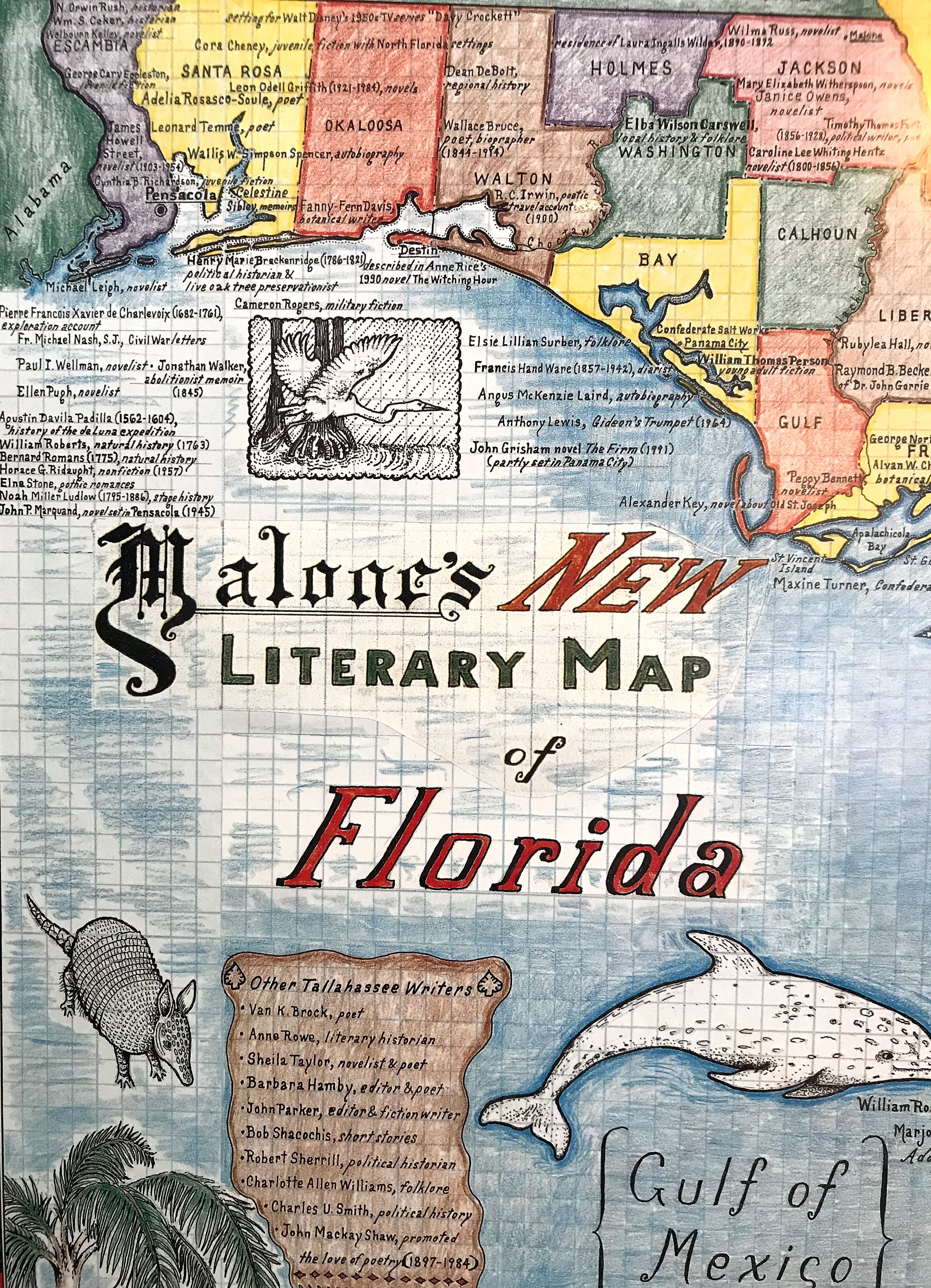
January 25 is National Florida Day, the one day set aside every year for the citizens of the other forty-nine states to celebrate the fact that their state is not as crazy as Florida. In fact, Florida is surprisingly rich in literary history, with the likes of Zora Neale Hurston, Marjorie Kinnan Rawlings, Harriet Beecher Stowe, and Ernest Hemingway all finding inspiration for their literary works while living in the state. Malone’s New Literary Map of Florida is an interesting piece, painstakingly compiled and illustrated by E.T. Malone. Malone is a journalist, editor, author, cartoonist, and an ordained Episcopalian Deacon. Living in North Carolina, he produced Literary Maps for the states of North Carolina, Georgia, and Florida between 1990 and 2001. Can you find your favorite literary figures from Florida on this map?
I could not resist jumping on the Bernie Meme Bandwagon with this iconic photograph from Green Cove Springs, Florida. I first saw this photo (without Bernie, of course) on the wall of Spring Park Coffee in Green Cove Springs about eight years ago, and was struck by its strong Southern Gothic vibe. I immediately posted it on my Facebook page as an entertaining oddity. I had no idea what the source of the photo was. Gator-hunting was a common activity on the St. Johns River at the turn of the last century. Hunters made a livelihood from the meat and skins, but it was also a recreational activity for Northern tourists who traveled to escape the cold winters and were curious about the exotic South. Soon after posting the photo to my Facebook page, a cousin commented that the man on the far left was our great-great grandfather. I was dumb-struck. It was a pivotal moment for me, as I was gathering my thoughts and writing essays at that time, which eventually became my memoir, “Cracker Gothic.” In Chapter 18, I do a little mental exploration of what it feels like to realize that I am descended from a dragon-slayer. It doesn’t look like Bernie really enjoyed the outing, though.
Zora Neale Hurston was born on this day, January 7, 1891. Hurston arrived in this world at the beginning of a new year. In her masterwork, “Their Eyes Were Watching God,” she writes, “There are years that ask questions, and years that answer them.” It feels like we’ve just emerged from a year of difficult, painful, soul-exposing questions. So much depends on how those questions get answered in the coming year.
It’s the anniversary of Marjorie Kinnan Rawlings’ birthday, born on August 8, 1896, in Washington D.C. I’ve written about Rawlings in a previous post, linked here. She has been one of my favorite authors since I read The Yearling in high school. In December 2019, I visited Rawlings’ home in Cross Creek, Florida, for a delightful Open House hosted by the Friends of the Marjorie Kinnan Rawlings Farm. During the lantern-lit tour of the old farmhouse, we were ushered into a room that held all of her works on display behind glass, including versions of her books translated into other languages. Seeing all of her books housed together gave me the idea that I’d like to read my way through Marjorie, start to finish. I set out in January of this year with a printout of her works in chronological order, and my stack of Rawlings’ books that I have accumulated over many years.
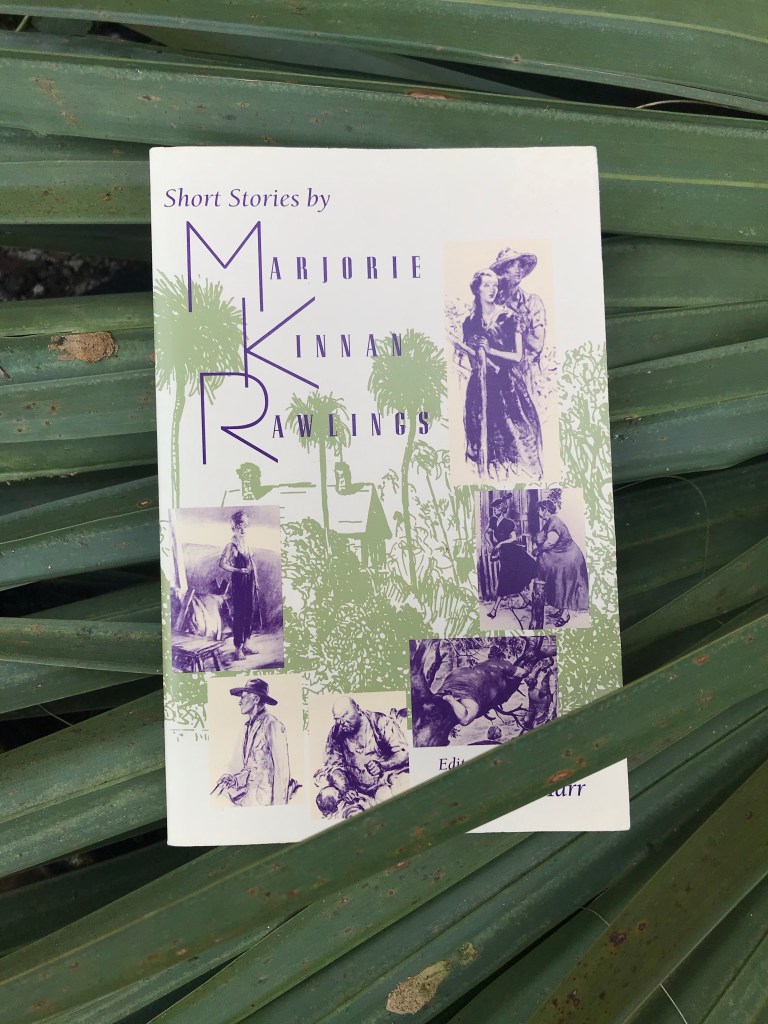
Rawlings’ first published writings were short stories, spanning the years between 1931 and 1949. Her novels fall within those years, so I read her earliest short stories first, then moved to her first novel, South Moon Under, published in 1933. In her short stories, Rawlings practiced character sketches and scenes from what she saw in this remote corner of Florida, an area referred to as “the Big Scrub.” She was developing an ear for the patterns of speech, watching interactions of moonshiners and subsistence farmers, familiarizing herself with a land of hidden swamp and overgrown hammock, then incorporating these elements into her later, better known novels.
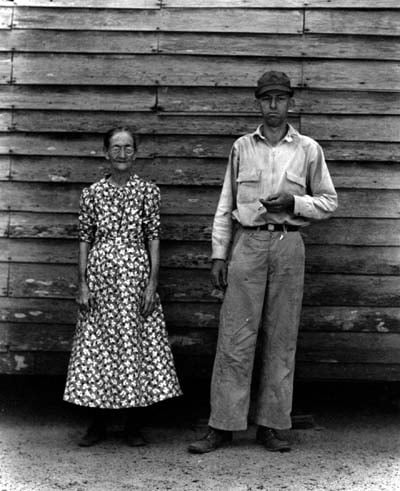
Piety Fiddia and her son Leonard, residents of the Big Scrub in Florida, the inspiration for the characters Piety and Lant in the novel “South Moon Under.”
South Moon Under was a finalist for the Pulitzer Prize, and in it, Rawlings captures the lifelong struggles of Florida Crackers in the late 19th and early 20th centuries. The book’s title refers to one of the moon’s stages, what they believed to be a critical influence upon hunting and crops, the basis for survival or death.
A neighbor of Piety’s has taken her son Lant under his wing, passing along his knowledge of survival in the scrub:
They had become cronies, as close as the distance between them allowed. They visited back and forth several times a year. Paine had passed on to the boy his lore of scrub and hammock… “Why, the boy’s right,” he said. “He knows the deer feeds on the moon, like most ary wild creeter. Four times the deer feeds. Stirs or feeds. Moon-rise and moon-down, and south-moon-over and south-moon-under. Come moon-rise, say, the deer’s done been sleepin’, ain’t they? They comes out about a hour ‘fore the moon. They feeds a while and frolics a while.”
Marjorie Kinnan Rawlings, South Moon Under, (New York: Grossett & Dunlap, 1933), 100.
I finished South Moon Under, but before I could start the next story, the world as we knew it ground to a halt. It was the middle of March 2020. And I don’t think I’m alone when I confess that I just couldn’t. Couldn’t read. Couldn’t write. Prepare meals? Shower? Were those things really necessary every day? We all were paralyzed in overwhelming uncertainty about everything we knew up to that point.
After a bit, I resumed reading, but I took a detour away from my Marjorie project. I had lost my enthusiasm for it. Instead, I followed a reading route that paralleled the mood of quarantine: May Sarton (A Journal of Solitude), then Virginia Woolf (A Room of One’s Own). Next, my brother and I created a two-person book club on Faulkner, so I read As I Lay Dying, The Sound and the Fury, and a partial read of Absalom! Absalom!. That was followed by Ta-Nehisi Coates and Harriet Beecher Stowe. It was more reading in four months than I’ve managed to do in a long time.
It’s August now, it’s Marjorie’s birthday, and I must get back to the Florida scrub. The next book on the list is Golden Apples, not considered one of her strongest works. I read it many years ago, and I will admit that it didn’t make much of an impression on me. So we’ll see. Maybe I’ll post something about it here after I have finished it.
Here is one more quote from South Moon Under, just a sample of so many visually rich descriptions of her beloved Florida wilderness that Rawlings left us in her writings:
The scrub was clearing. Instead of the cathedral half-light, as though the sun came down from high small windows, the space ahead was bright. Lant stepped suddenly out of the scrub and was on a dim wagon road. Ahead was a low stretch of gallberry flats and beyond, a growth of small bay trees, “the bay.”
The precipitousness with which the scrub stopped always astonished Lant. It rolled, a great ocean of scrawny pine, with boundaries sharper than any sea. There were no pine breakers, feeling out an alien soil. It was there, the scrub, immense, aloof and proud, standing on its own ground, making its own conditions, like no other. When it ended, it ended, more implacably than a life, for there was something in a life that went on–a memory–a related life–a union with the earth, producing new growths and new lives. The scrub made no unions. The two swift rivers bounded it; a fringe of hammock, of swamp; as here, a strip of gallberry flats and bay-head flats; within, it was inviolable.
Marjorie Kinnan Rawlings, South Moon Under, (New York: Grossett & Dunlap, 1933), 125.
A list of Rawlings’ works is located at the end of the Wikipedia entry about Rawlings, linked here.
Front porch at Christmas time, Marjorie Kinnan Rawlings home, Cross Creek, Florida
Big news! “Cracker Gothic: A Florida Woman’s Memoir” has recently been reviewed on The Florida Book Review website. It is an honor for me to be included among so many legendary Florida books and authors! FBR Contributing Editor Victoria Calderin writes: “Anyone who has ever cared for an ailing family member, lost a spouse, felt that tourists just don’t get their town, won free coffee for a week, knows #floridaman, understands gator hunting to be a profitable business, or grew up looking at calendars in awe of their mysterious white winters will find a kindred spirit in Wanda Suttle Duncan.”
The Florida Book Review website is a great resource for all types of Florida reading – you’ll find reviews and articles on works by Harriet Beecher Stowe to Carl Hiaasen to Zora Neale Hurston, and of course, my favorite, Marjorie Kinnan Rawlings. There is something for everyone in Florida literature, and you’ll find it all on the FBR website. Contemporary works like “Mostly Dead Things” by Kristen Arnett and Lauren Groff’s “Florida” are reviewed there. So are the books that have come to be known as the bastions of Florida history and culture: “A Land Remembered” by Patrick D. Smith and Marjory Stoneman Douglas’s “The Everglades: River of Grass.” The website is divided into sections, providing a hint to the broad diversity of literary genres plumbed by Florida writers. Working through all of the books listed in the “Classic Florida Reads” section would keep me happily reading, nonstop, for a year.
Along with many literary standards, there are some surprising jewels to be found as you peruse this website. A visit to the “Food and Drink” page provides a detailed and entertaining review of “The Storm Gourmet: A Guide to Creating Extraordinary Meals Without Electricity” by Daphne Nikolopoulos. Lynne Barrett is the reviewer, and she explains why this book is invaluable not only to Floridians subject to arbitrary and lengthy power outages, but anyone who wants some culinary creativity when camping or boating, And let’s not limit this to Floridians; it could really come in handy if you’re stranded without electricity in January after an ice storm takes out the power lines to your neighborhood for days. How can you resist a survival book that has the audacity to suggest a menu of Tapenade Toasts, Salmon-Tabouli Salad with Sun Dried Tomatoes and Pine Nuts, and Peach-Raspberry Torte? Another great find on the website’s “Food and Drink” page is “To Have and Have Another: A Hemingway Cocktail Companion” by Philip Greene. Reviewed by Bob Morison, the book is a cocktail itself of recipes, literary notes, and photos. There are children’s books, YA books, sports, fantasy, crime, mystery, you name it. As a writer, the list of Florida presses and Florida literary publications is particularly helpful.
I highly recommend a visit to The Florida Book Review, and send my thanks to them for taking the time to read and review “Cracker Gothic.”
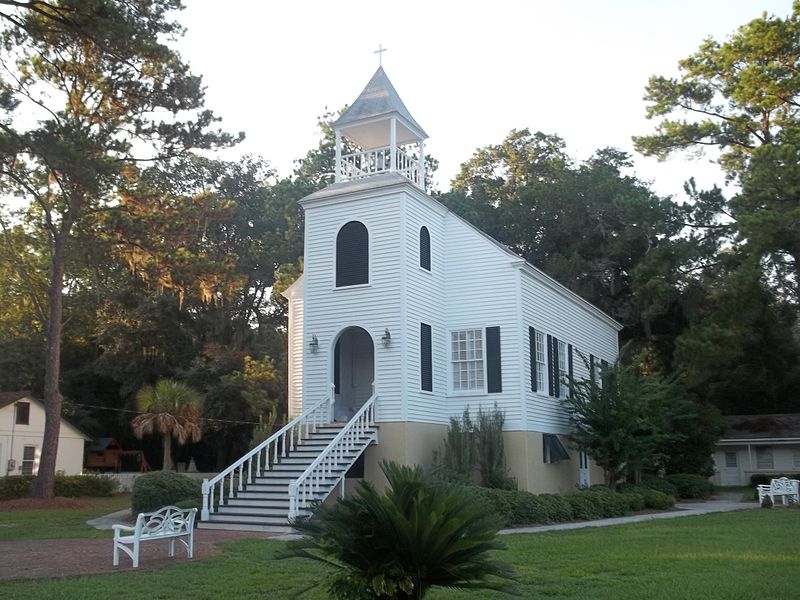
First Presbyterian Church in downtown St. Marys, Georgia
St. Marys is the southern-most town on the coastline of Georgia, situated on the St. Marys River and near the Cumberland Island National Seashore. It is a charming town with lots of history, and is a short drive from the Okefenokee Swamp. St. Marys is the second oldest continuously-inhabited city in the United States, having been established by the British in 1787. St. Augustine, Florida, about 75 miles south of St. Marys, holds the distinction of being the oldest continuously-inhabited city in the country.
Below is a link to St. Marys Magazine, where Cracker Gothic was featured in the latest issue. You can navigate to the article by sliding the bar at the bottom of the screen to “Page 32-33.” I hope you will enjoy browsing through the entire magazine and learning more about historic St. Marys!
JaxByJax Literary Arts Festival has announced its Writers/Readers for the upcoming festival, and I made the cut! You can read about the history of the festival and see the list of the 2019 authors to be featured at this link.
Marjorie Kinnan Rawlings was born on this date, August 8, 1896, in Washington, D.C. She spent her early years north of the Mason-Dixon line, in D.C., Michigan, and Wisconsin. Marjorie began writing as a young girl, and continued writing into her post-college career, living in New York City, then Rochester, New York, and in Louisville, Kentucky. In 1928, Marjorie and her then-husband, Charles Rawlings, made a bold move and purchased a 72-acre plot of land, including an orange grove, in rural, north-central Florida. The land and its inhabitants enchanted Marjorie, and provided a rich source of inspiration for her writing for the rest of her life. Her neighbors across swamp and hammock were from old pioneer family stock, Florida Crackers who lived from the land, wavering perilously on what would have appeared to any outsider as the brink of abject poverty.
My love for Rawlings’s writing began in high school. Her descriptions of old, primitive Florida resonated with me, the Florida that I experienced growing up in a rural county. Her Florida matched mine: sandy road beds leading through palmetto scrub, shaded by the dark, curving branches of mossy live oaks; friends and family members who lived at the ends of those sandy roads in weathered-wood houses with darkened tin roofs, a clothesline in the side yard, chickens in a wire pen.
I’ve pulled out one of my copies of “Cross Creek” in the last few days, picking it up in the evenings to read a few chapters as Rawlings’s birthday approaches. It has been a long time since I indulged myself in the singular pleasure of reading my favorite author. Here is her accounting of traveling with a friend by horseback through the Florida backwoods of the 1930s:
“We entered the River Styx gently. Surely, death itself must come as quietly. The open fields, bright in the reality of sunlight, gave way easily to pine lands. The pines grew thicker, the sweet scent of their needles rising. The sunlight was spotty, the shadows of the tall trees wider. Here and there a live oak told of changing soil. Then, imperceptibly, we were in deep hammock. Coolness came in on us. The leaves of magnolia and bay trees shut out the sun, as all dark everlasting foliage must shut it out from the silent places of the dead. The hammock merged into cypress swamp. A trumpet vine dropped flamboyant flowers from a lone palm. The blossoms seemed gaudy funereal. There were no birds singing from the cypresses. No squirrels swung in and out of the sepulchral arches of the trees. Out of the dimly defined road a great white bird rose, flapping noiseless wings. It was huge, snow-white as an angel of death, with a wide black mourning band around the edge of the wings. I became aware that the soft dampness of the road had turned into a soft rippling. The whole floor of the forest was carpeted with amber-colored water, alive, moving with a slow, insidious current. We had entered the River Styx.”
Rawlings captured the essence of an old, forgotten wilderness in her writing, and the surprising thing is that it was not her native land. She easily fell into the category of “damned interloper,” a term I use frequently as I observe outsiders moving into the rural corners of my Florida, building stucco-covered McMansions in hideous housing subdivisions. But I’ve come to consider now that maybe that is what’s needed to fully appreciate and describe a place—the eyes of an outsider. Rawlings became immersed in a world that was exotic and foreign; she wrote sensitively about the people and the region, seeking and eventually winning acceptance as an insider. Without her fateful decision to buy a parcel of land in faraway Florida, we all would have missed the opportunity to experience the quiet seasons in the marshes and hammocks, the world of Jody and Flag, the song of the redbird in the scrub.
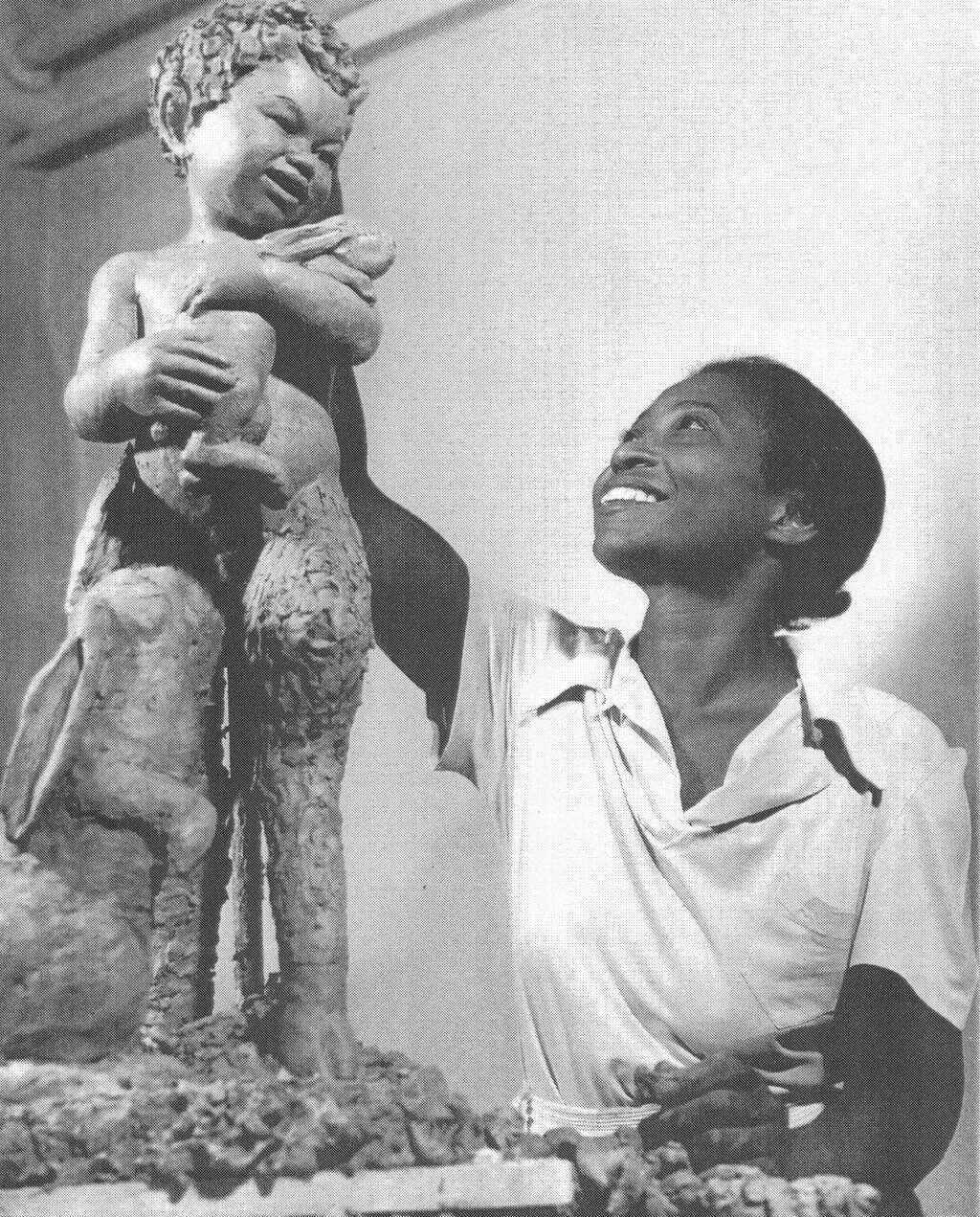
Augusta Fells Savage was born in Green Cove Springs, Florida, on Leap Day, February 29, 1892. Her life story has lain dormant for decades, the legacy she left in the world of art has been overlooked, forgotten. She was an important artist and educator during the Harlem Renaissance in New York City. A recent exhibition, at the Cummer Museum of Art in Jacksonville, Florida, based on the research of and curation by Dr. Jeffreen Hayes, showcased Savage’s works along with the art produced by some of her students in the 1920s and 1930s. Among these students were Jacob Lawrence and Romare Bearden, who went on to become well-known artists in the second half of the twentieth century. After closing in 2018, the exhibit traveled to New York, where it is currently showing at the New York Historical Society.
Savage’s story was featured on NPR today, and here is the link to the story.